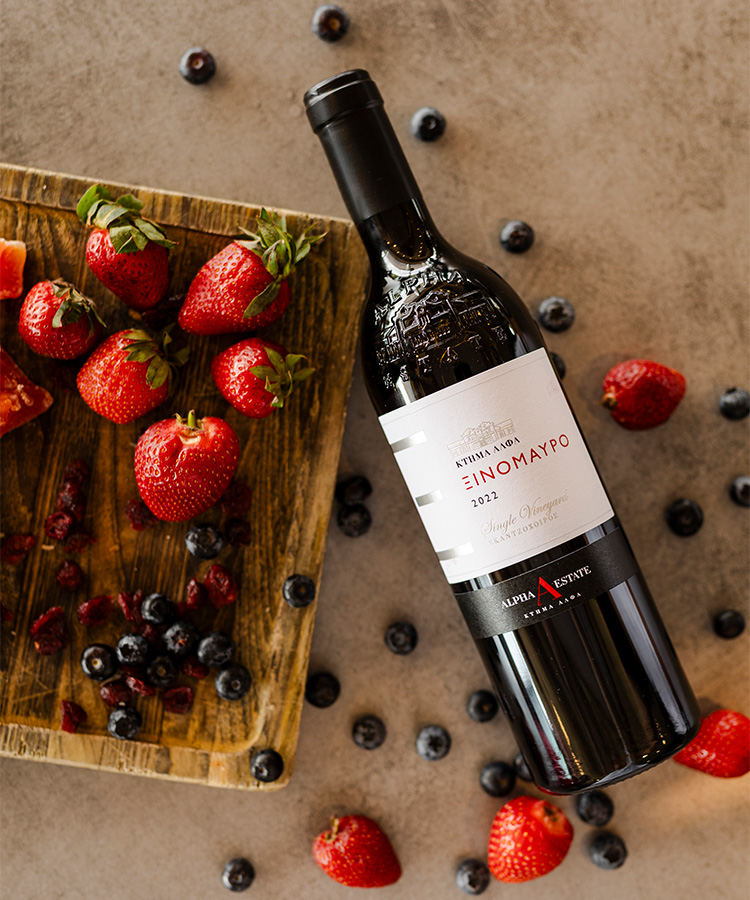
Somewhere between the hunt for minimal intervention wines, admiration for well-balanced reds, and the endless quest for “something different,” wine drinkers have been quietly training their palates to fall for Xinomavro. Greece’s beloved red grape is quickly catching on as the must-drink, cool-climate wine in the U.S.
The quintessential “New-Old World” wine offers that rare mix of red fruit, crisp acidity, and refined tannins, with a long history dating back to the time of Alexander the Great, now officially protected under the PDO Amyndeon (ΠΟΠ Αμύνταιο) designation. Even those who have long worked with the grape remain impressed by it.
“Finesse and balance are the key factors for our wines,” says oenologist Angelos Iatridis, who founded the pioneering winery Alpha Estate, which produces premier Xinomavro in northern Greece. “It wasn’t always this way. It used to be about power. But our climate and soil produce the tartaric acid that’s critical to the acidity in Xinomavro and gives it the ability to age.”
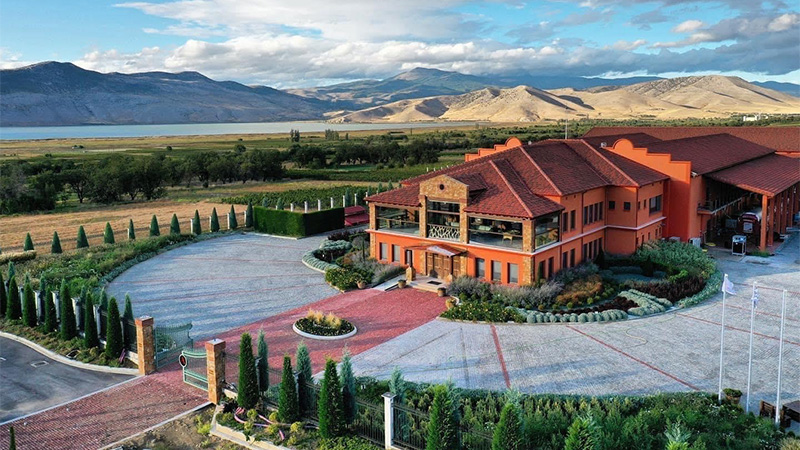
He refers to the viticultural area, Amyndeon, a Protected Designation of Origin (PDO), which has become Greece’s most compelling cool-climate region. region. Nestled in the mountainous north-western lakeside frontier of the Greek mainland, Amyndeon is a
far cry from the stereotypical images of Greek wine. Instead of sea breezes and sunny islands, here, steep hillsides meet lakes; the air is crisp, and the mountains develop snow caps in the winter.
Ancient Soil, Modern Climate
The Amyndeon plateau reaches some 600 meters above sea level, and the surrounding four lakes contribute to a long, slow ripening period for the grapes. This temperate climate makes winemaking a delightful pursuit within the Florina PGI (ΠΓΕ Φλώρινα) zone. Iatridis credits the sandy soils — the result of ancient lake-bed sediment — with the purity of expression he finds in the wines here. He said that the roots have grown down at least ~18 meters, into the ground in certain blocks, an almost unheard-of depth for grape vines except in the rarest of places.
Angelos Iatridis and his co-founder, viticulturist Makis Mavridis, founded Alpha Estate in Amyndeon with the foresight that one day it would be the leading winemaking region in Greece. They combined their vast wine knowledge: Iatridis, who worked in renowned French regions such as Bordeaux and Alsace, and Mavridis, a second-generation winegrower, experimented with new winemaking technologies to push the limits of what Xinomavro could be.
Then they got a stroke of extra luck. It turns out that climate change has had a positive effect on grape-growing, slowly warming the cool environment to the point where viticulture benefits from a gradual maturation period with fewer extreme weather moments that would greatly impact agriculture. In other words, it’s not too hot, and not too cold. The warmer climate also moved the harvest earlier to September from October, when rains often threatened the crops.
For the inner chemist in Iatridis, it allowed him to develop the ideal phenolic conditions in the grapes to give more structure, volume, and roundness to the wine without high alcohol levels. The Alpha Estate wines hover around 14 percent alcohol for their Xinomavro.
This evolution impacts the flavors and mouthfeel, too. Today’s Xinomavro features flavors of red fruits like strawberries and slightly savory notes of sun-dried tomato alongside floral notes of rose petal and spices. The tannins are silky and polished, which makes it ready to drink upon release, and the hallmark acidity allows it to be both food-friendly when younger but also cellar-worthy. Iatridis said the wines could easily age 30 to 40 years, much like the Nebbiolo of Barolo to which it is so often compared in the wine community.
Myth Meets the Vine
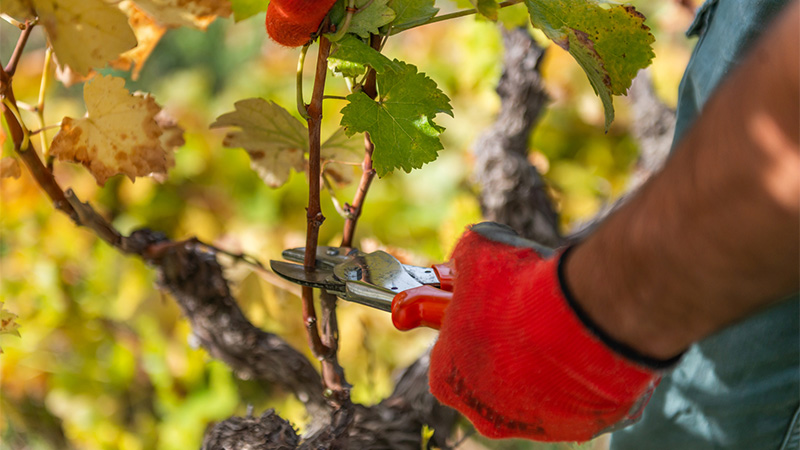
Along with their technical expertise, the Alpha Estate team leans on the rich history of the region. Xinomavro has been continuously cultivated here for centuries, with its evolution dating back to antiquity; it is thought to be the wine in the cups of characters in many Greek stories. It has a strong correlation to the Kingdom of Macedon, home to Alexander the Great, and played a key role in the kingdom’s economics for both the Kingdom of Macedon, and later the Ottoman Empire.
Today, Xinomavro is considered Greece’s most important indigenous red variety and has retained its popularity in modern times. Iatridis said that when Greeks think of red wine, they think of Xinomavro.
It has also retained its link to Greek mythology — the region happens to be associated with Dionysus, the Greek god of wine. The Alpha Estate team considers the grape the “soul” of the region, especially for the for the ‘’Barba Yannis’’ single block, which features ungrafted vines planted in 1919 that were never hit with Phylloxera, the disease that wiped out most of the wine grapes in the world.
There, they craft the renowned Ecosystem Xinomavro Reserve Vieilles Vignes Single Block “Barba Yannis’ from the Amyndeon PDO.
“It’s the character of what Xinomavro is, the pure expression, and reveals the intense characteristics of Xinomavro PDO Amyndeon (ΠΟΠ Αμύνταιο),” Iatridis says of the wine. “It’s, for us, the cornerstone.”
Passing the Torch
While Xinomavro may be the heart of the operation, Iatridis has seen an uptick in demand for white wines, like Alpha Estate’s Assyrtiko PGI Florina, made from another indigenous Greek variety, and, of course, rosé. The same characteristics that make Xinomavro such a standout red wine also lend themselves to a top-notch rosé. Amyndeon is the only appellation to be denoted PDO for rosé Xinomavro wines. The Alpha Estate Rosé is a quintessential style from this appellation, made from 100 percent Xinomavro. Angelos Iatridis prides himself on Alpha Estate’s ability to stay ahead of the curve, and part of that stems from “looking for learning everywhere, including from my children,” he says.
Both of Iatridis’s children work with him at the winery, and he attributes the company’s continued success, in part, to the ideas and the perspectives of the younger generation. His daughter, Angeliki Iatridou, wrote her university thesis about a specific clone of Xinomavro, and the Alpha Estate team is now using that research to inform viticultural decisions. She now works in marketing. His son, Nikolas Iatridis, works in production.
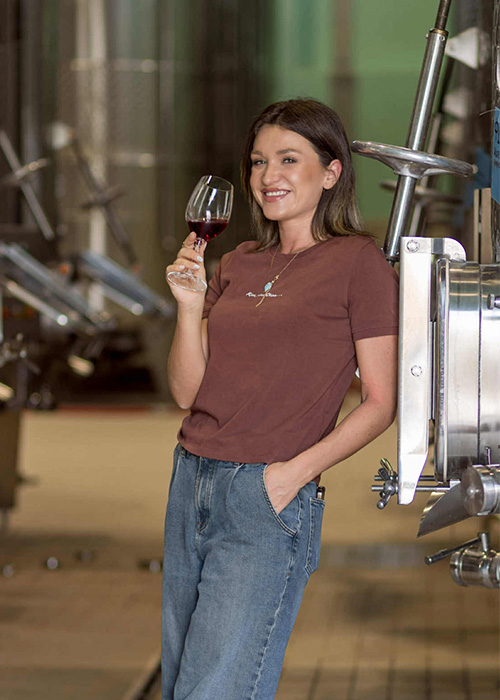
“I believe wine is changing so fast, and they bring new ideas, new approaches, so it’s important to follow their ideas sometimes,” Iatridis says. “It’s a winning situation to understand them, and I’m always studying and thinking about how we can adapt.”
Alpha Estate is also acclimating to an increase in visitors to the region, thanks to the area’s budding wine tourism. When it launched in 1997, it was one of only two wineries in the region. Now, there are more than 250 wineries. They have also seen the variety of visitors expand to a more international set, with more than 40 percent of their visitors hailing from outside of Greece.
“Amyndeon is one of the 33 PDO appellations in Greece, but it wasn’t what people thought of as Greek wine,” Iatridis says. “But it’s a new world of wine drinkers, and we are being discovered and that’s exciting.”
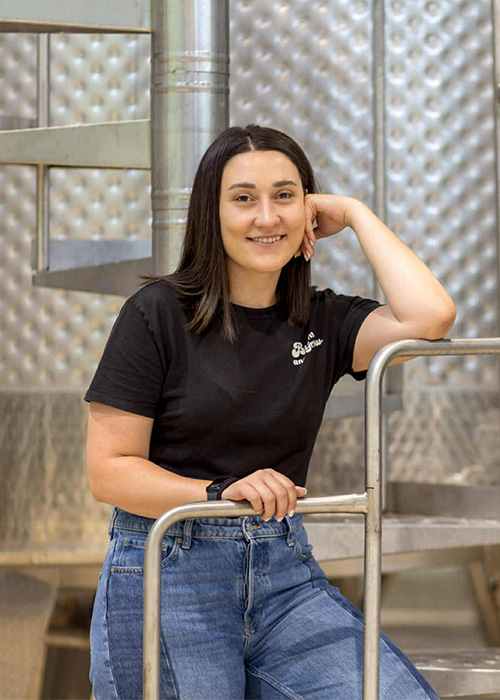
Iatridis said that he has seen the younger population reach for lighter style red wines, including Xinomavro, and that is an exciting next step for Amyndeon. Whether someone has had experience with Xinomavro or hasn’t yet experienced it, Iatridis said that he likes being able to introduce it.
“I always suggest that you taste a young PDO Amyndeon Xinomavro,” he adds. “It’s a red grape stylistically, but it’s a very, very Greek one.”
This article was produced in partnership with Alpha Estate, financed by the European Union and Greece.

