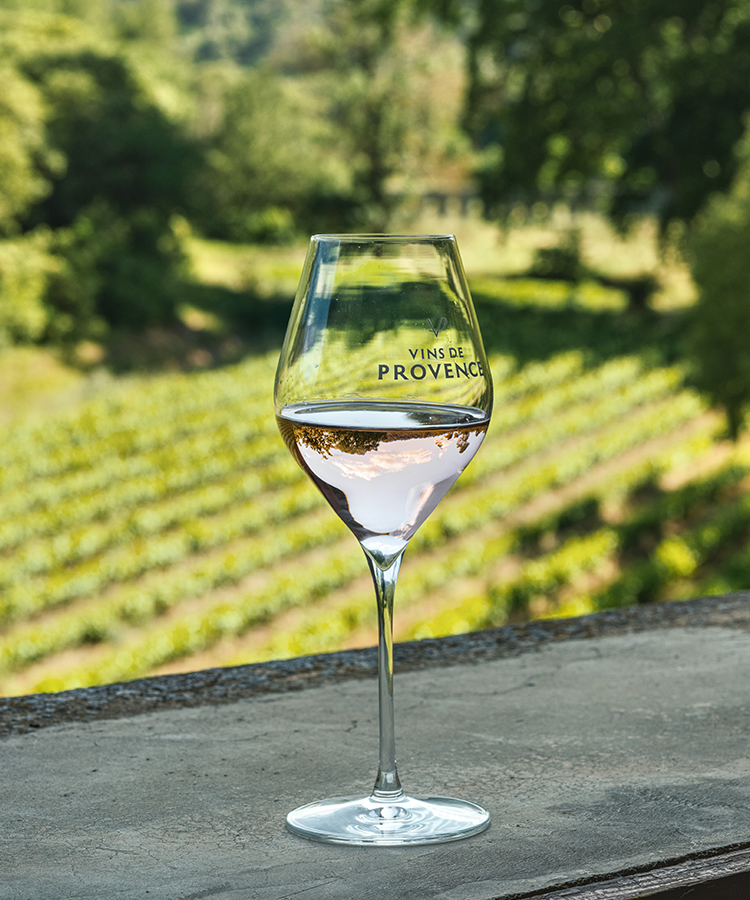

When the warm weather hits right, a chilled glass of rosé is hard to beat. But we’re not talking about just “any” rosé. We’re uncorking one from Provence.
Provence isn’t just famous for rosé. It’s the only major wine region on earth entirely dedicated to it. Across three protected appellations d’origine contrôlée (AOPs) stretching 200 kilometers from the foothills of the Alps to the Mediterranean coast, 5,000 growers have spent decades perfecting a single style: pale, precise, and instantly recognizable anywhere in the world.
That style is built on a mosaic of soils, microclimates, and grape varieties that no other region can replicate. Grenache, Cinsault, Syrah, Mourvèdre, and Rolle — always blended and balanced — produce wines that range from delicate and floral to rich and mineral, giving drinkers a genuine diversity of expression under one unmistakable identity.
Its signature color, ranging from pale salmon to faint blush, is intentional. Short maceration, often through direct press, extracts just enough pigment for aromatic depth without adding heavy tannins. Older vintages that have spent more time in the barrel can develop richer, spiced, ripe-fruit profiles.
The other main ingredient is terroir. Provence averages around 3,000 hours of sunshine and just 2.5 inches of rain per year, stressing the vines enough to concentrate flavor while delivering a rich ripeness of the fruit without excess alcohol.
Soils range from crystalline schist (granite) and limestone to clay and coastal sandy soils, giving each wine a distinct personality. And cutting through it all, the Mistral, a cold, dry wind that sweeps the landscape regularly, keeps the grapes dry, reduces disease pressure, and preserves the crisp acidity that’s come to define every great Provençal rosé.
The region also has some of the wine world’s most rigorous sustainability commitments: 67% of vineyards are organic or HVE certified, 82% are cover-cropped, and every bottle carries the PDO designation; Europe’s most demanding quality guarantee.
At the table, Provence rosé earns its keep. Its crisp acidity, subtle fruit, and dry finish make it one of the most food-versatile wines. Equally a perfect option for sushi, barbecue ribs, spiced Indian dishes, or a cheeseburger with aioli.
From vine-to cellar-to bottle, every stage is meticulous for rosé: selecting the best grapes, night-time harvesting to preserve aromatics, continuous temperature control, and vinification by direct press or cold skin maceration.
Here are some quick facts to deepen your savoir-rosé.
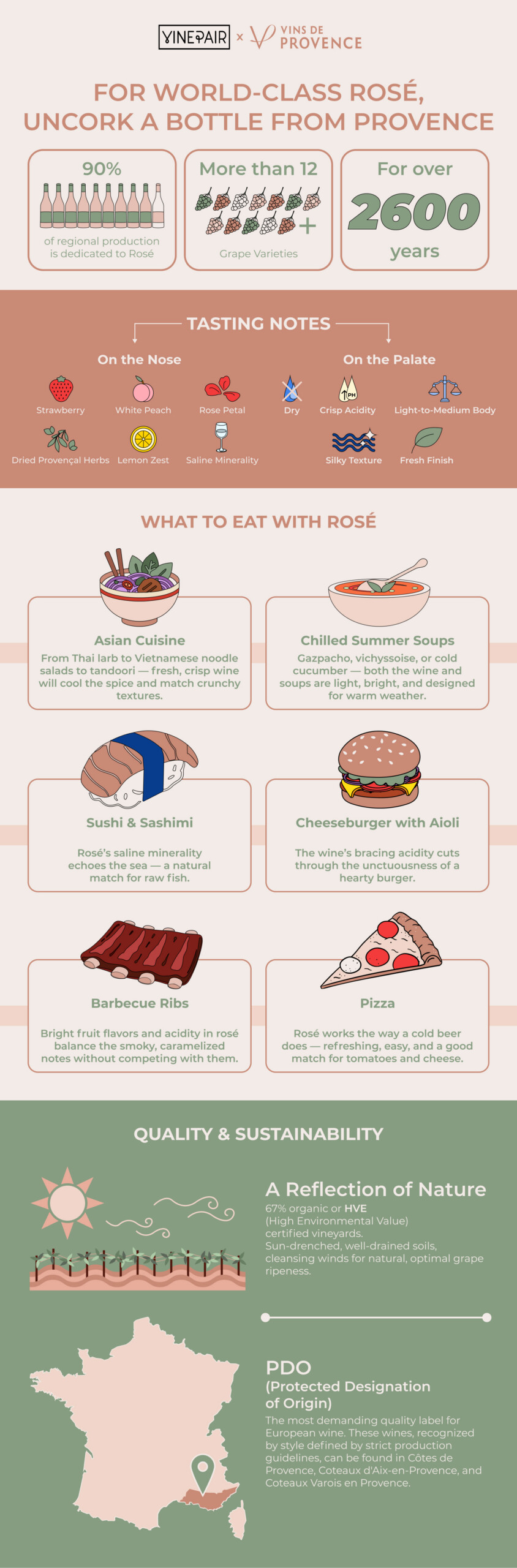
This infographic is sponsored by Vins de Provence.
