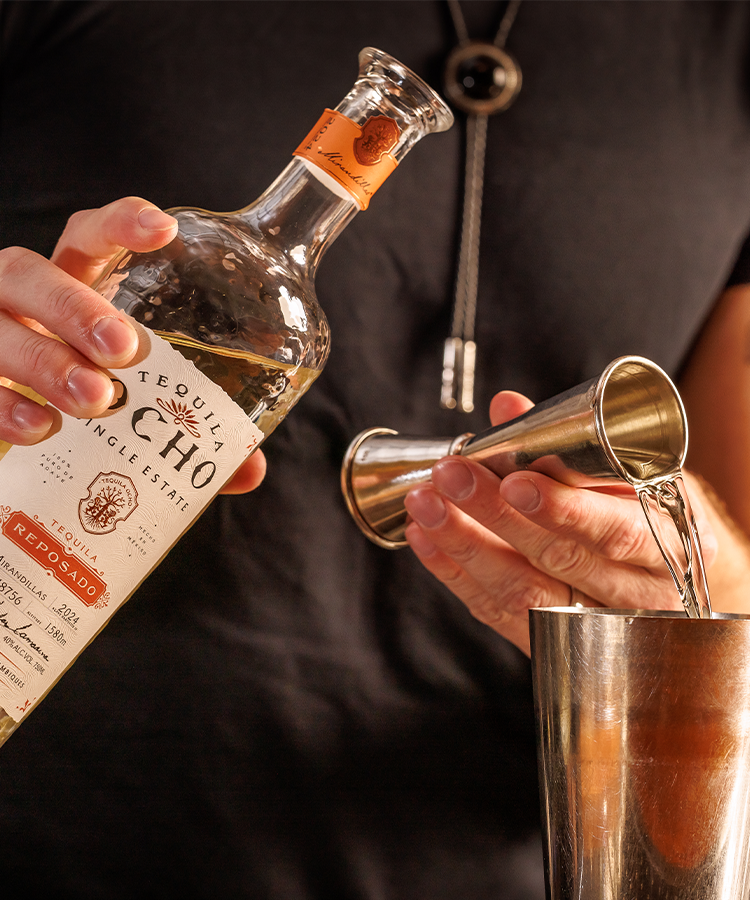

“Single-estate.” It’s a fancy descriptor for what is in truth a radically simple idea: making tequila from Blue Weber agave harvested from a single, select field, in order to showcase its distinct terroir.
It’s a concept that Tequila Ocho, founded in 2008 by a fifth-generation agave farmer, first pioneered in the industry and continues to champion today, proving that tequila — as much as wine — can show distinct terroir.
To learn what that difference makes in the bottle, you can find Tequila Ocho at your local liquor store or glean the insights below from some of the top American bartenders in the industry.
Tequila, Elevated
By emphasizing its product as a single-estate expression, Tequila Ocho has made the case that the category is as every bit worth investing in as a fine Cognac or scotch.
“I think back to the early 2000s, when there weren’t that many tequilas available out there [in the U.S. market], and then getting more involved in the bar industry and learning about how things are made,” says Sarah Morrissey, beverage director for Golden Age Hospitality in New York. “It was a world of difference, going from something that’s cheap in the well to learning about single-estate tequilas.”
Jackson Cannon, beverage and bar director at Eastern Standard Hospitality in Boston, concurs. “Tequila Ocho were pioneers of the idea of single-estate agave, something that was unknown in the category before. What’s really profound about that is that it gives a chance in the category of tequila — which is more known for hitting house styles, regardless of how the crop comes in — to see what various yields can lend to an expression. It’s really intriguing for connoisseurs, because we want to get to understand the terroir,” he says.
Andrew Volk owner of Hunt & Alpine, Portland, Maine, stresses Tequila Ocho’s value as a teachable spirit. “I think the opportunity for guests to learn a little bit more about any spirit category is really exciting and important,” he says. “We talk about single-estate wines, we talk about ‘single’ on lots of different things. Certainly, there’s a lot of terroir that’s involved in products we love — like scotch and wine and cognac and even bourbon to an extent — and to be able to experience that same thing with tequila is just a really incredible opportunity. The opportunity to taste stuff that is unique within its category and unique amongst similar products is something that guests are looking for and it’s something that bartenders have always been excited about.”
Tequila as an Expression of the Land
As is the case with any other product tied to specific plot of land, Tequila Ocho expresses the characteristics of the soil from which its principal ingredient—in this case, agave—was grown.
“Single-estate tequila highlights what makes tequila truly unique,” says Max Reis, beverage director at Mirate and Daisy Margarita Bar in Los Angeles. “It is an agricultural product whose flavor begins in the field, not merely in the barrel or through production techniques. Each estate, each harvest, and each expression should be unique, showcasing the individuality of the land it came from. It also exposes the shortcomings of tequilas that prioritize production methods and aging while placing less emphasis on the quality and character of the agave itself. The agave is the art; everything that happens afterward is merely the frame.”
Gabe Sanchez, cocktail expert at Midnight Rambler at The Joule in Dallas, weighs in on its value as a potable snapshot of particular slice of earth. “Tequila Ocho single-estate tequila matters because this tequila is a portrait of a specific time, a specific place, guided by two masters — it is very unique. The soil, the air, the sunshine, the essence of the estate is captured in every bottle.”
The Tequila-Wine Handshake
Beyond the obvious comparisons in spirits, the nature of a tequila possessed of its own terroir likens it to another category famously tied to the earth—wine.
“The thing that everybody will congregate around is the idea of terroir, obviously, and I think that in and of itself is a mental breakthrough for consumers. Obviously, it’s something a lot of people in our industry are familiar with but being able to taste the difference between plots of land is still a challenging expectation for a lot of consumers. So, contextualizing agave into this more wine-coded language gives a little more continuity to this whole idea of terroir,” says William Elliott, executive bar director at Premiere Enterprises in New York.
“I also think that it calls into focus vintage variation. Year over year, there’s subtle changes that may or may not be intentional, and I think that once people are more comfortable with the idea of terroir, that opens up the door to being more comfortable with this idea of vintage variation — that not everything needs to be the same every single year for every single vintage. Obviously, there should be continuity, but it doesn’t need to be a mirror image every year because what’s going on is the producers responding to the needs and to the constraints of the product,” he continues.
Oscar Simoza, bar manager at The Wig Shop in Boston, has a colorful personal descriptor for Tequila Ocho: “the wine nerd’s tequila.”
“Most tequila is blended from different fields and harvests to taste the same year after year. Every release comes from a single ranch, harvested in a specific year, meaning you’re tasting exactly what that piece of land produced. Same plant, same people, same process, but different dirt, different weather, different vibes. Turns out agave is a lot like people from Boston: where it grows up matters,” he says.
What makes Ocho so cool is that it helped teach people that tequila is an agricultural product. It’s a crop. It’s farming. The same way people obsess over vineyards, coffee farms, or chocolate origins, Ocho gave us permission to nerd out over agave fields,” Simoza continues.
Words, however, can only convey so much. To truly experience Tequila Ocho’s revolutionary approach to creating a tequila stamped with the terroir of the land that made it, find a bottle at your local bottle shop or bar.
This article is sponsored by Tequila Ocho.
