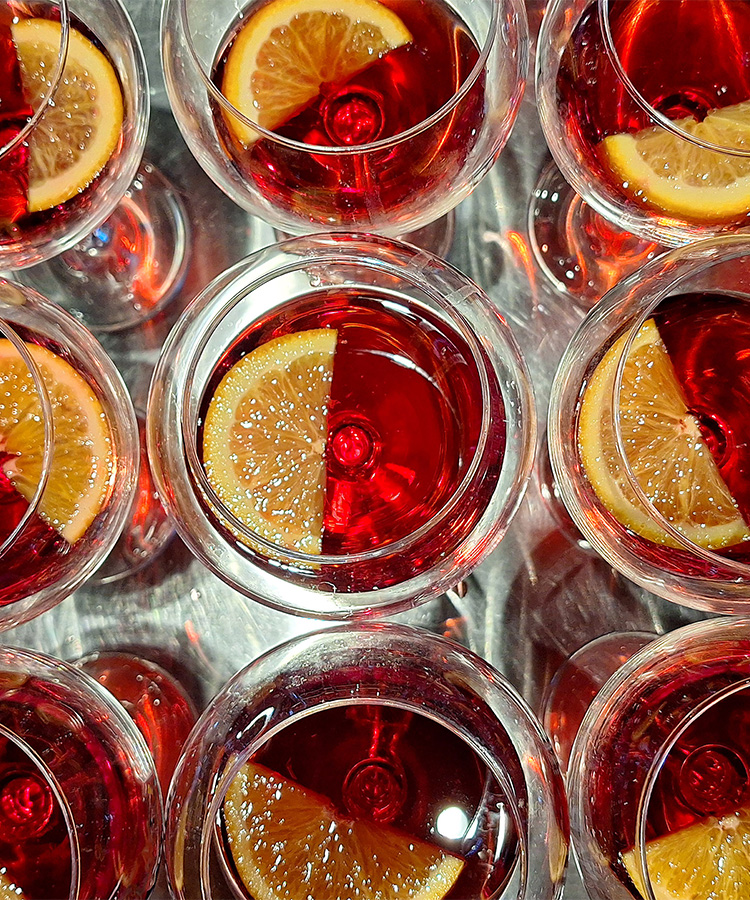
In Italy, drinking before dinner isn’t just a way to start the evening in Italy. It’s a tradition.
The aperitivo, or pre-dinner drink, is a custom that has been deeply rooted in Italian culture for generations. The idea behind the practice, much like America’s happy hour, is to ease into the evening starting with a few snacks and a drink to awaken the palate.
Today, the aperitivo is mostly associated with a chic cocktail sipped at a table in a crowded piazza. However, the custom is much older than the colorful, trendy cocktails, such as the Aperol Spritz, that have become so popular in recent years.
For centuries Italians have been drinking aperitivi, fortified wines infused with herbs as well as botanical liqueurs, which were thought to have medicinal properties. Today this category includes some of Italy’s most iconic spirits, each one bringing a bit of its local tradition to the glass.
Vermouth: The Turin Original
Vermouth can be considered the core of Italy’s aperitivoculture, not only as an elegant pour on its own but also as one of the quintessential cocktail modifiers. The vermouth we drink today originated in Turin, the capital of the Piedmont region in northern Italy, and gets its name from the German word for wormwood, Wermut.
In 1786, Turin local Antonio Benedetto Carpano created the first sweet red vermouth by mixing wine with sugar and adding his own blend of herbs and spices. Today’s version resembles the original recipe, with fortified wine as a base that is then aromatized with a special combination of herbs, roots, and spices.
Cinzano and Martini & Rossi were just some of the big names to produce vermouth in the city of Turin, made famous at the local cafes where they were first served to their chic clientele.
Today, sweet red vermouth continues its popularity, traditionally served neat or on the rocks with a slice of citrus. Vermouth is also an essential ingredient in some of the most famous cocktails in the world such as the Negroni, Manhattan, and the Americano.
Cynar: Italy’s Artichoke Aperitivo
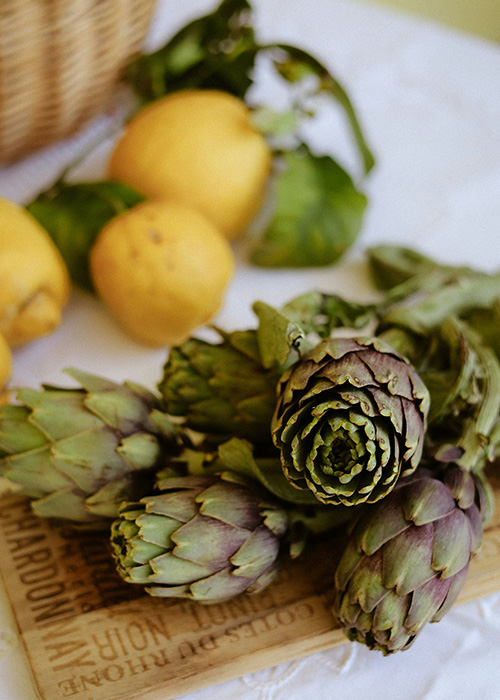
A lot of unexpected ingredients have been turned into some of Italy’s best liqueurs. For instance, Cynar, made from artichokes.
The liqueur was created in Venice in 1952 by Angelo Dalle Molle and his brothers. Of course, you’d expect a liqueur made with artichokes to taste like artichokes, but despite being a major ingredient, Cynar doesn’t taste like artichokes at all.
The name Cynar comes from the botanical name for the globe artichoke, Cynara scolymus. The drink is made with 13 different herbs and plants with a primarily earthy and bitter flavor profile balanced by a sweet finish.
Cynar’s arrival on the market coincided with the change in the postwar café culture of Italy. It was promoted through a series of memorable TV commercials featuring the actor Ernesto Calindri, becoming synonymous with the need to relax and unwind from the pressures of everyday life in the 1960s and 1970s.
The liqueur is still an essential part of aperitivo culture, either served on the rocks or topped up with soda. It is also used in a host of other cocktails from sours to stirred, prized for the unique bitter flavor that adds dimension to so many recipes.
Amaro Montenegro: Bologna’s Herbal Tradition
Most Italian amari are served after meals but the line between an aperitivo and a digestivo is often blurred.
While Amaro Montenegro is traditionally consumed as a digestivo, after dinner, it also makes for a great aperitivo drink, when served on its own or mixed with soda or tonic.
Stanislao Cobianchi created the liqueur in 1885 in the city of Bologna, and called it Elisir Lungavita. It was later renamed in honor of Princess Elena of Montenegro, who married Italy’s future King Victor Emmanuel III in 1896.
Amaro Montenegro is made with 40 different botanicals spanning citrus, flowers, spices, and various roots, and has a very gentle bitter taste. Because of its milder bitter flavor profile, Montenegro is considered one of the most accessible Italian liqueurs in the amaro category.
As with so many of the Italian drinks, there is no hard and fast rule about how to enjoy them. The same liqueur can be used as an aperitivo before dinner or as a digestivo after. It is also a favorite ingredient in various modern cocktails.
Rosolio: A Historic Liqueur Returns

Long before Aperol Spritzes became so popular, another Italian liqueur was offered to guests at parties and gatherings: rosolio.
Rosolio, is on the sweeter and more delicate flavor spectrum of aperitivi. Locally, it’s a classic pour for guests at special occasions and family gatherings.
Made from a recipe that includes flowers, herbs, fruits and spices grown nearby, this traditional drink was, until recently, produced almost exclusively by families in the central and southern regions of Italy.
For a long time rosolio was out of fashion, but today the category is experiencing a renaissance of sorts thanks to the 2016 launch of Italicus Rosolio di Bergamotto.
Italicus Rosolio di Bergamotto is a bright, floral, citrus-forward liqueur made with Calabrian bergamot, Sicilian citron, and other botanicals. It’s traditionally served with sparkling wine or tonic, though it has now found its way onto the menus of some of the most influential cocktail bars around the world.
An Italian Tradition That Continues to Evolve
From the historic vermouth houses of Piedmont to the bergamot groves of Calabria, Italy’s aperitivo culture is as varied as the regions that helped shape it.
Each category brings something different to the table. Vermouth adds herbal complexity to classic cocktails, while bitter liqueurs like Cynar and Amaro Montenegro offer bartenders a way to balance sweetness and introduce new layers of flavor. Meanwhile, floral, citrus-forward rosolio brings a lighter touch to spritzes and other refreshing drinks.
While these spirits have deep roots in Italian tradition, their influence now extends well beyond Italy. Bartenders around the world are finding new ways to incorporate them into both classic and contemporary cocktails, introducing a new generation of drinkers to ingredients that have been enjoyed in Italy for centuries.
The core of aperitivo culture remains the same as when it began. At its heart, enjoying aperitivi is still about taking a little time before dinner to relax, share a drink, and perhaps catching up with friends and family.
This article is sponsored by the Italian Trade Agency.

