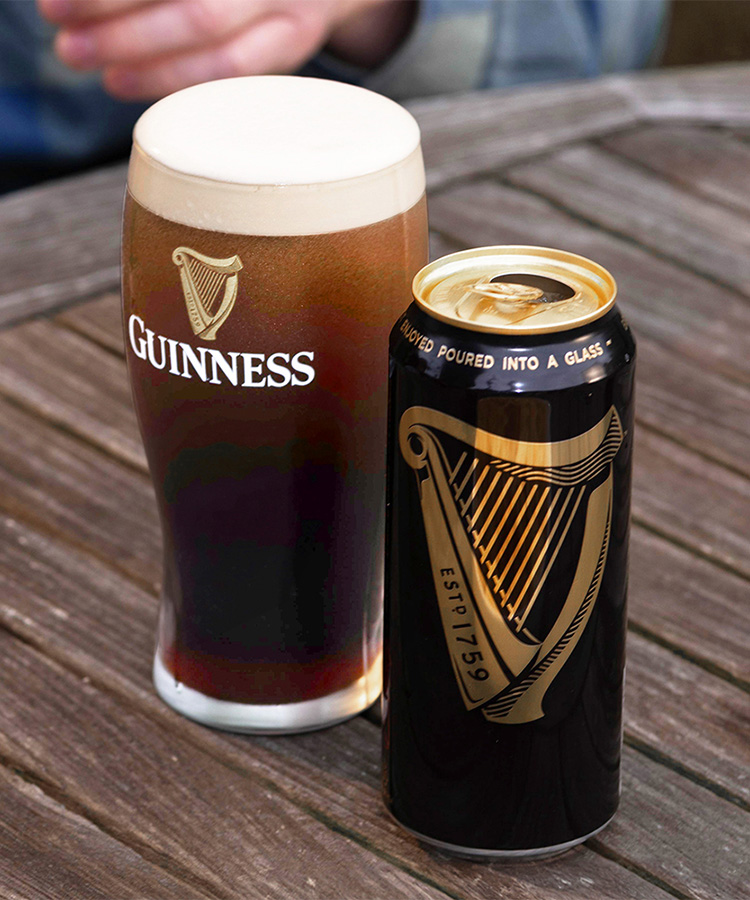
There’s something iconic about a perfectly poured pint of Guinness. From its deep ruby-black color and creamy white head to the mesmerizing cascade of bubbles as the beer settles, it’s a drink that’s often as much about the experience as it is about what’s in the glass.
That experience has been more than 260 years in the making. Since Arthur Guinness began brewing at Dublin’s St. James’s Gate Brewery in 1759, this Irish stout has become one of the world’s most recognizable beers. Along the way, Guinness has developed a unique drinking culture all its own, with the ritual of the “perfect pour” becoming an important part of its identity.
Unlike most beers, which are poured in one continuous motion, Guinness is traditionally poured in two parts with a little break between them. The bartender starts by holding the glass at a 45-degree angle and then filling the glass ¾ of the way full. At that point, the bartender will typically put the glass down on the bar to settle, and possibly head off to make another drink while they wait. Once it’s settled, the bartender will return and finish topping off the pint, leaving a thick white head on the top of the glass.
While pouring a pint might look simple enough (they even get a break in the middle!), there’s a surprising amount of skill involved. From the angle of the glass and the timing of the pour to knowing exactly how long to wait before topping off the pint, every detail of the process contributes to that signature presentation. For bartenders who take pride in serving Guinness, those small details can make all the difference.
So, what’s the secret to pouring the perfect pint? We asked five bartenders who know Guinness inside and out to share their techniques, from the glass angle to the all-important settling time.
The importance of the two-step pour
“It’s one of the most uniquely poured beers in that it has nitrogen as opposed to traditional CO2. It just needs that time and effort. Otherwise, you’re not going to get the consistency that you would expect if you got a Guinness here versus the next spot… Just take your time, use the glass as your cue, and be patient.” – Whitney Dutton
A perfect pint begins with a clean glass.
“You want to make sure your glass is nice and clean. You get that nice color, that rich dark color that Guinness has. You want consistency. So that to me is the first thing I would tell somebody to do.” – Janean Malloy
You need to get the angle right
“I really think that it just boils down to the amount of time that you kind of let it settle for, and that angle is very important. If you’re pouring straight into the cup, it will be bubbly, and obviously you don’t want a Guinness that has bubbles on top. You want a kind of cold foam look to it. So I think that it boils down to like the amount of time that you let it set for, and truly the angle that you’re pouring it at.” – Haley DeSimone
You’ll know the perfect pour when you see it
“I think any time that you rush, or take it too seriously, or just try to just get through it, you’re going to end up with something that’s not really even. There is something about aesthetics to me. An aesthetically beautiful Guinness just feels right. You don’t have to measure it; you can just look at it and tell that it feels right. When you do the two-step pour, you lean more into the aesthetics of the final product, and that’s the most important thing, and that’s why you can’t rush it.” – Maurice Arrington
A great pint is about more than the beer
“I think once we’ve kind of passed the obvious tells of having the proper glassware, looking to see how high the head is, making sure the head isn’t touching the harp… I think what makes it great is the company in the room. I think once a place gets their Guinness dialed in, it’s about the atmosphere around it. So for me, it’s the comfortability and whoever I’m getting a pint with.” – Jack Dylan Sullivan
This article is sponsored by Guinness.
