Set your navigation southwest from Paris and follow your wine-loving heart to the Loire. There, along the curving river’s central stretch, you’ll find the country’s third-largest wine region: a verdant, chateau-studded valley where waves of vines give birth to grapes destined for an effervescent future.
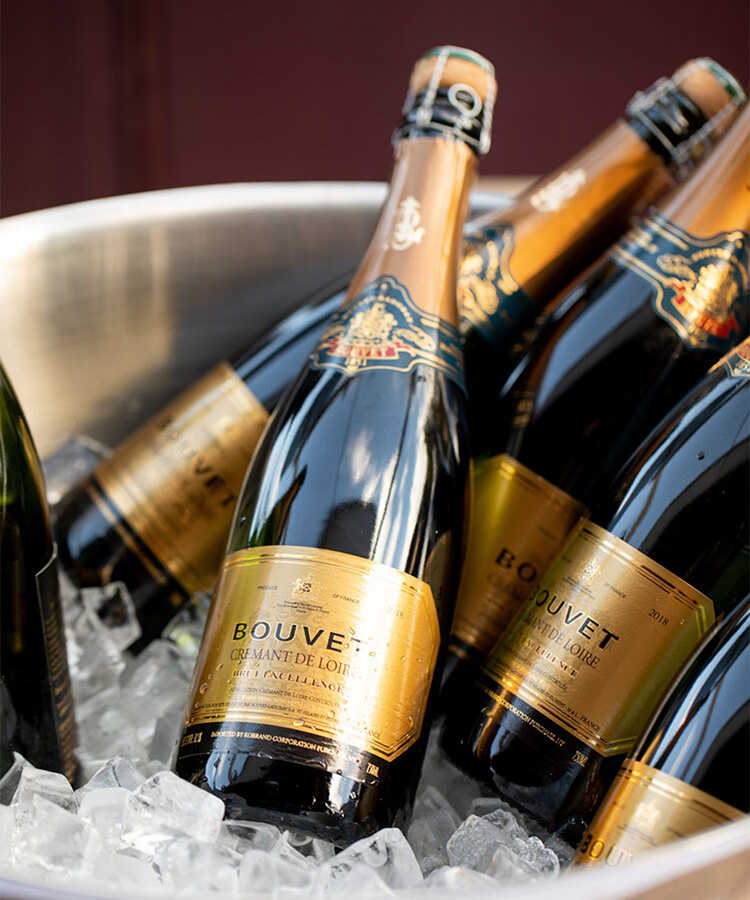
You’ll find it in a bottle of Bouvet-Ladubay’s sparkling wine.
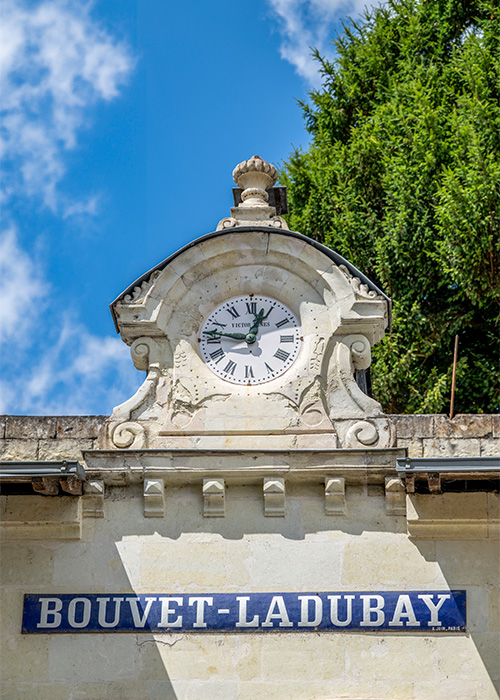
Bouvet-Ladubay is located in Saumur, a Loire region that is one of France’s most acclaimed for its sparkling wines, and since the mid-19th century, that’s been Bouvet’s specialty. Founded by husband and wife Etienne Bouvet and Célestine Ladubay in 1851, and taken over by the Monmousseau family after the former’s death in 1908, the maison has since grown into the largest producer of méthode traditionnelle sparkling wine in Saumur.
This year, Bouvet celebrates 175 years, and there’s no time like an anniversary to pop open a bottle of bubbly while learning more about the praised French producer and the true lure of the Loire.
Sparkling wine is the sign of a good time: shimmering on a sunny seaside terrace; glowing under candlelight at a corner bistro; reflecting the dancing lights of a disco ball in a glass. It’s a beverage that’s synonymous with luxury and celebration, but that doesn’t mean you should wait for a specific moment to open a bottle. Bouvet-Ladubay crafts traditional wines for modern times. Think of their sparkling wines as the perfect accompaniment for all occasions.
The Signature Limestone At the Heart of the Loire
Before diving into the Bouvet bouquet, it’s important to understand the history and geology of the Loire Valley, a UNESCO World Heritage site (acknowledged in 2000 for its “outstanding cultural landscape”) where architecture, agriculture and the region’s wines are all defined by a unique local limestone known as tuffeau.
Underfoot is where the magic happens, the natural sorcery responsible for the health and flavor of the fruit at the heart of the Loire. A soft, porous stone, tuffeau is the key component of Saumur’s signature chalky soil, fostering a friendly growing environment for the region’s grapes.
On the taste and texture front, tuffeau is also to credit for the pleasant minerality you’ll find in many of the region’s wines. (For example, in a bottle of Bouvet Signature Brut.)
Above-ground, the limestone has long played a part in the life and look of the Loire. An almost-luminescent rock, the “stone of light” was the building material of choice for the rich, the royal and the religious. And it was limestone’s harvesting that, centuries later, would create the very setting for Bouvet-Ladubay today.
Subterranean Sipping: the Cellars of Bouvet-Ladubay
Cave à vin is French for wine cellar, and you can take the word “cave” quite literally in the Loire.
When the harvesting of limestone began in the 11th century, Saint Florent monks hollowed out some of the hillside, digging deep into the earth to acquire the stone to build their abbey. In the 19th century, some of the quarries left behind were transformed into wine cellars, sacred spaces where one can now commune with a slightly different kind of divine.
When Bouvet-Ladubay was founded 175 years ago, its cellars were built beneath the remains of an old abbey. There the limestone also does the crucial work of natural climate control to elegantly mature the wines.
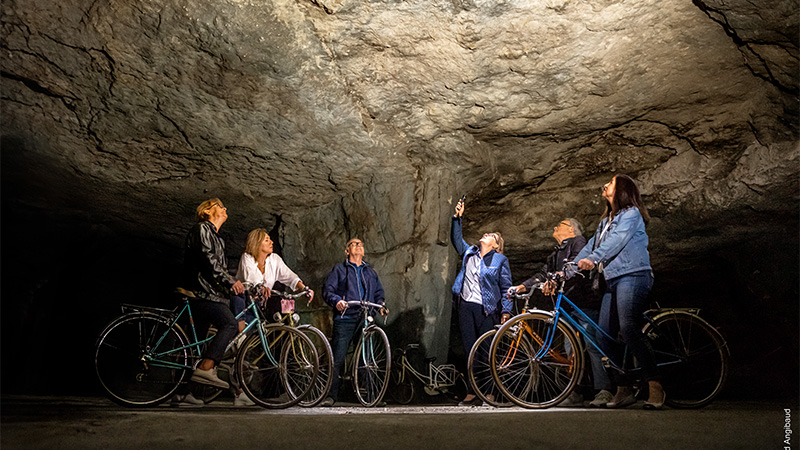
Today, a visit to Bouvet-Ladubay includes the opportunity to roam through eight kilometers of cellars where their wines are stored and aged. In this enchanting underground location in the Loire, thousands of visitors pass through the cellars each year (on foot or by bike), then sip sparkling wines in the adjacent tasting room.
The Beauty of the Blend: A Tale of Three Grapes
In the (translated) words of Bouvet-Ladubay’s Patrice Monmousseau: “Nothing is more essential to the finesse of bubbles than art and artists.” And whether you consider it more of an art or a science, Cuvée is about the beauty of the blend.
A product of countless hands and hearts, Bouvet-Ladubay works with around 80 winegrowers on more than 100 different plots, and their wines are made from three grapes that thrive within the Loire’s special soil: Chenin Blanc, Chardonnay, and Cabernet Franc.
Chenin Blanc is the Loire’s signature grape, a variety with fruity aromas up front and a balanced palate that grows richer over time. Chardonnay is newer to the Saumur region since the 20th century, but has found a happy home in its limestone soils, resulting in firm, full-bodied and truly fine white wines. Making its Loire debut in the 11th century, Cabernet Franc (used in rosé) is the first red grape variety to arrive in the region, and is characterized by aromas of ripe, dark fruit, subtle spice notes, and a deep ruby hue.
It’s from these grapes that the year’s Cuvée is created: a bouquet that acts as a sippable time capsule and a testament to today’s terroir. Carefully and expertly orchestrated, it’s blended by Bouvet-Ladubay to ensure sparkling wine excellence. It’s the benchmark the producer has prided itself on since the very beginning.
A Global Legacy: 175 Years of Wine and Culture
With Juliette Monmousseau at the helm of Bouvet, bubbles remain a family business fueled by four generations of pride and passion. These are qualities that extend far past France’s borders and beyond the world of winemaking.
Following an “Appointment of the House of Lords,” Etienne Bouvet was named the official supplier to the British Parliament back in the 1870s, and today Bouvet’s wines are now exported to around 50 countries (including the United States through Kobrand). And while wine making is an art, it’s not the only expression Bouvet is focused on. The brand has also long been synonymous with culture, and in the 1990s, the Monmousseaus opened the Bouvet Ladubay Contemporary Art Center to revive the tradition of artistic patronage in the Loire. They also restored and reopened the theatre that had originally been built by Bouvet.

Easy Elegance: a Taste of the Good Life For All
Offering elegance and ease, the Bouvet Crémant de Loire is sippable all meal long and, with notes of green apple and toast, pairs particularly well with poultry and freshwater fish. The Bouvet Rosé Excellence is perfect for popping at a summer picnic, its pink fizz serving as a fresh, slightly fruity foil for spicy, saucy barbeque. And with white-gold bubbles and notes of brioche and pear, the Bouvet Signature Brut is an effervescent accompaniment to richer meals or pairs perfectly with simpler dishes such as a cheese plate.
It’s not just a matter of the vintages’ versatility but also their value. Bouvet-Ladubay prides itself on accessible elegance. Merging quality with affordability, these sparklings offer an authentic taste of the Loire — and of the good life — for all who open a bottle.
This article is sponsored by Bouvet Ladubay.
